A plain-language guide to the law that protects India’s elderly – what it promises, how it
works, and where it falls short.
Most people in India have never heard of the Maintenance and Welfare of Parents and Senior
Citizens Act, 2007. That includes many of the people the law was written to protect.
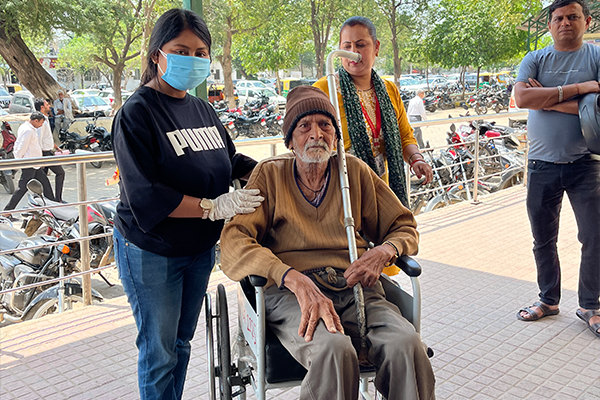
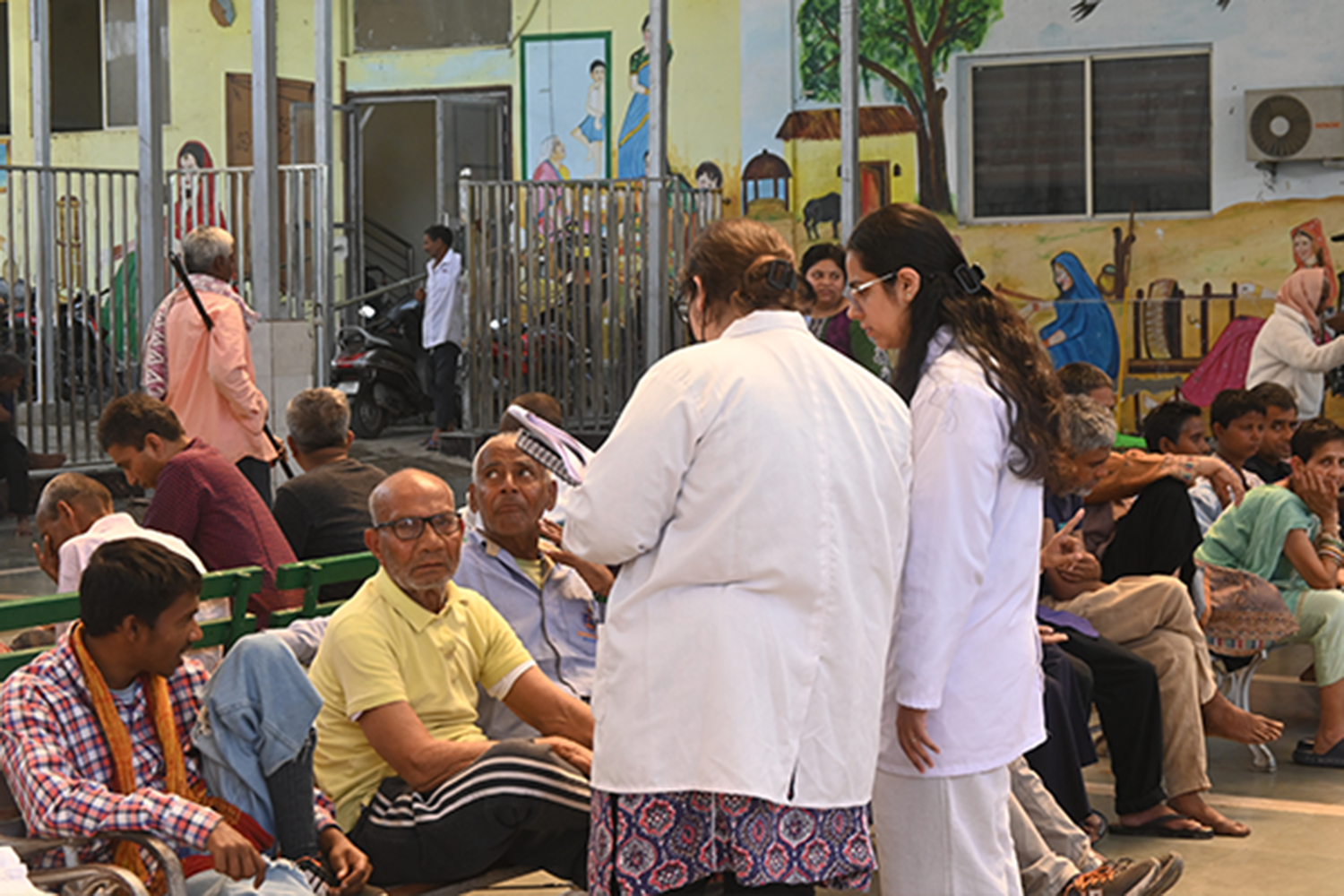
At The Earth Saviours Foundation, we shelter over a thousand individuals who were abandoned
by their families – left on streets, outside hospitals, at railway stations, often in critical condition.
Many of them had legal rights they never knew existed. Rights to financial support from their
children. Rights to their own property. Rights to medical care mandated by the state. None of it
reached them.
This guide exists to change that, even if only a little. Whether you are a senior citizen trying to
understand what protections you have, a family member navigating a difficult caregiving
situation, or simply someone who wants to understand how Indian law addresses elder care –
this is the most important piece of legislation you need to know about.
What Is the Maintenance and Welfare of Parents and Senior Citizens Act?
The Maintenance and Welfare of Parents and Senior Citizens Act, 2007 is a central
legislation enacted by the Indian Parliament to ensure that elderly parents and senior citizens
receive basic financial support, care, and protection from their children, relatives, and the state.
It was notified in December 2007 and has been progressively implemented across Indian states
since then.
The Act is grounded in Article 41 of the Indian Constitution, which directs the state to make
provisions for securing the right to public assistance in cases of old age, sickness, and
disablement. It recognises a basic truth: that in a country where formal social security for the
elderly barely exists, the law must step in to ensure that families and the state do not abandon
their responsibilities.
Under this Act, a “senior citizen” is any Indian citizen aged 60 years or above. A “parent”
includes biological, adoptive, and step-parents regardless of their age. “Children” includes sons,
daughters, grandsons, and granddaughters, but not minors. For childless senior citizens, the
obligation extends to “relatives” – defined as any legal heir in possession of or set to inherit the
senior citizen’s property.
What Does the Act Actually Guarantee?
The Act covers four broad areas: the right to claim maintenance from children and relatives, the
establishment of tribunals to enforce these claims, protections related to property, and state
obligations around healthcare and institutional care. Here is how each works in practice.
The Right to Claim Maintenance
Under Section 4 of the Act, if a senior citizen or parent is unable to maintain themselves from
their own earnings or property, they can apply for a monthly maintenance amount from their
children or, in the case of childless senior citizens, from relatives who possess or will inherit their
property.
The term “maintenance” is defined broadly. It includes provision for food, clothing, residence,
medical attendance, and treatment. It is not limited to a bare-minimum survival standard – the
law recognises that elderly people are entitled to a reasonable quality of life.
Under the original 2007 Act, the maximum maintenance amount a Tribunal could order was
₹10,000 per month. The 2019 Amendment Bill, introduced in the Lok Sabha in December 2019,
proposes to remove this cap entirely and allow Tribunals to set the amount based on the
standard of living of the senior citizen and the earning capacity of the children. As of 2026, the
Amendment Bill was introduced and referred but its passage remains pending. The ₹10,000 cap
under the original Act continues to apply in most states.
A critical feature: this right applies even if the children live abroad. The Act does not exempt
non-resident Indians from their obligation to maintain their parents in India.
Maintenance Tribunals: How Claims Are Heard
The Act requires every state government to establish Maintenance Tribunals at the
sub-divisional level and Appellate Tribunals at the district level. These are not regular courts –
they are quasi-judicial bodies designed to be faster and more accessible than the civil court
system.
Any senior citizen (or, on their behalf, any voluntary organisation authorised by them) can file an
application before the Tribunal. The application process is free of cost. No court fee is required.
Legal representation through lawyers is permitted, though it was initially restricted under the
original Act – a provision that was subsequently read down by the Punjab and Haryana High
Court as inconsistent with the Advocates Act, 1961.
The Tribunal is expected to dispose of the application within 90 days, extendable by 30 days in
exceptional circumstances. If maintenance is ordered and the children or relatives fail to pay, the
Tribunal can issue a warrant. Non-payment can lead to imprisonment of up to one month or until
payment is made.
Appeals against Tribunal orders can be filed before the Appellate Tribunal within 60 days of the
order.
Additionally, under Section 5, the state government is required to appoint a Maintenance Officernot below the rank of a District Social Welfare Officer – to represent elderly persons who are too old, too ill, or too indigent to file and argue their own applications. This is a crucial provision for the most vulnerable, though in practice, awareness and availability of Maintenance Officers varies widely across states.
Property Protections
One of the most practically important provisions of the Act is Section 23, which deals with
property transfers made by senior citizens to their children or relatives.
If a senior citizen has transferred their property – by way of gift or otherwise – to a child or
relative, whether before or after the Act came into force, with the understanding (express or
implied) that the transferee would provide basic amenities and care, and the transferee
subsequently fails to do so, the transfer is voidable at the option of the senior citizen. In plain
language: if you gave your house to your son on the understanding that he would look after you,
and he stopped doing so, you can get the property back.
The Supreme Court affirmed this principle in its 2025 ruling in Urmila Dixit v. Sunil Sharan Dixit,
holding that gift deeds can be revoked under Section 23 when the recipient fails to provide the
promised care and maintenance.
This provision is particularly significant because property transfer is one of the most common
precursors to elder abandonment in India. The pattern is familiar to anyone working in elder
care: a parent transfers the home to a child, the child secures legal ownership, and the parent’s
bargaining power within the household disappears overnight. Section 23 was designed to
counteract precisely this dynamic.
State Obligations: Healthcare and Old Age Homes
Chapter IV of the Act places obligations on the state government to provide healthcare facilities
for senior citizens. Specifically, it mandates that the government ensure an adequate number of
hospital beds for senior citizens, establish separate queues for the elderly at government
hospitals, provide facilities for the treatment of chronic, terminal, and degenerative diseases,
and expand research in geriatric care.
The Act also requires state governments to establish old age homes – at least one in every
district – with the capacity to accommodate 150 or more indigent senior citizens. These homes
are to provide basic amenities including shelter, food, medical care, and recreation. In practice,
the implementation of this provision has been uneven. Some states have established
government-run or government-aided homes; many have not met the statutory mandate.
It is this gap between what the law mandates and what the state actually provides that
organisations like TESF exist to fill. Our shelter in Gurugram is not a substitute for state
infrastructure – it is a response to the absence of it.
Abandonment as a Criminal Offence
Under Section 24 of the Act, abandonment of a senior citizen is a criminal offence. If any person
who has the care or protection of a senior citizen leaves them in any place with the intention of
wholly abandoning them, they are punishable with imprisonment of up to three months, or a fine
of up to ₹5,000, or both.
This provision is important symbolically – it signals that the state regards abandonment as a criminal act, not merely a family matter. However, enforcement remains a challenge. The penalty is modest, complaints require the elderly person to come forward (which many are unable or unwilling to do), and police stations rarely prioritise these cases. The 2019 Amendment Bill proposed the appointment of a dedicated Nodal Officer for senior citizens in every police station and a Special Police Unit in each district, which would be a significant step forward if enacted.
The 2019 Amendment Bill: What It Proposes to Change
The Maintenance and Welfare of Parents and Senior Citizens (Amendment) Bill, 2019 was
introduced in the Lok Sabha on 11 December 2019. It proposes significant expansions to the
original Act. The Bill lapsed with the dissolution of the 17th Lok Sabha and its status in the
current Parliament remains under discussion. In December 2025, the government confirmed in
a written reply to the Lok Sabha that the legislation is being reconsidered.
Key proposed changes include:
Removal of the ₹10,000 maintenance cap – Tribunals would be empowered to set
maintenance amounts based on the standard of living of the senior citizen and the earnings of
the children, with no upper limit.
Expanded definition of “children” – to include sons-in-law, daughters-in-law, and legal heirs,
broadening the pool of people who can be held liable for maintenance.
Mandatory registration of care homes – all institutions providing residential care to senior
citizens would be required to register with a designated authority and comply with prescribed
minimum standards for food, infrastructure, medical facilities, safety, and staffing.
Nodal Officers and Special Police Units – every police station would have a designated
Nodal Officer for senior citizen complaints, and each district would have a Special Police Unit
dedicated to elder safety.
Homecare service regulation – the Bill introduces provisions for regulating homecare services
for senior citizens who have difficulty performing daily activities due to physical or mental
impairment, including requirements for trained and certified caregivers.
If the Amendment Bill or a revised version is passed, it would represent the most significant
strengthening of elderly rights legislation in India since the original Act. We urge the government
to prioritise its passage.
The Gap Between Law and Reality
We want to be honest about something. The Maintenance and Welfare of Parents and Senior
Citizens Act is a meaningful piece of legislation. Its provisions, on paper, are comprehensive
and well-intentioned. But at TESF, we see every day the distance between what the law
promises and what India’s elderly actually experience.
Awareness is critically low. Most senior citizens in India – particularly those from lower-income backgrounds, those in rural or semi-urban settings, and those with limited literacydo not know this Act exists. They do not know they can claim maintenance. They do not know Tribunals exist. They do not know that abandonment is a criminal offence. A law that its intended beneficiaries have never heard of is, functionally, no law at all.
Tribunal infrastructure is inadequate. Many states have been slow to establish Maintenance
Tribunals at the required density. Where Tribunals exist, they are often housed within overburdened district bureaucracies, staffed by officers with multiple responsibilities, and plagued by the same delays that characterise the broader Indian judicial system. The 90-day disposal mandate is routinely exceeded.
Enforcement lacks teeth. A three-month imprisonment and ₹5,000 fine for abandonment is not
a serious deterrent. More importantly, the enforcement mechanism assumes that the abandoned person is able and willing to file a complaint – an assumption that fails for the most vulnerable victims, who are often too ill, too disoriented, or too afraid to approach authorities.
The state has not built what the Act mandates. The requirement for government-run old age
homes in every district remains unfulfilled in much of India. Geriatric healthcare infrastructure is
almost non-existent in public hospitals outside metros. The state’s obligations under Chapter IV
of the Act are, in many regions, simply unmet.
None of this means the law is worthless. It means the law is incomplete without the institutional
infrastructure, public awareness, and political will to make it effective. And until that infrastructure exists, organisations like TESF will continue to fill the gap.
How to File a Maintenance Claim: A Step-by-Step Overview
If you are a senior citizen or parent who is unable to maintain yourself and your children or
relatives are not providing support, here is a simplified overview of how the Act can help you.
We strongly recommend consulting a local legal aid centre or Maintenance Officer for
assistance with the actual filing.
Step 1: Identify the Maintenance Tribunal. Every sub-division should have a Maintenance
Tribunal. Contact your District Social Welfare Office, District Magistrate’s office, or local legal aid
centre to find the Tribunal in your area.
Step 2: File an application. You can file the application yourself or authorise a voluntary
organisation to file on your behalf. There is no court fee. The application should state your age,
your inability to maintain yourself, the names and addresses of the children or relatives from
whom you are seeking maintenance, and the amount you believe is necessary.
Step 3: The Tribunal hears the case. The Tribunal will issue a notice to your children or
relatives and hear both sides. Evidence of your financial condition, medical needs, and the
respondent’s earning capacity will be considered. The Tribunal is expected to dispose of the
matter within 90 days.
Step 4: Maintenance order. If the Tribunal finds your claim valid, it will order your children or
relatives to pay a monthly maintenance amount. Payment is typically due within 30 days of the
order. Interest of 5–18% may be applied on delayed payments.
Step 5: Enforcement. If the respondent fails to comply, the Tribunal can issue a warrant.
Continued non-compliance can result in imprisonment of up to one month or until payment is
made.
Step 6: Appeal. Either party can appeal the Tribunal’s order before the Appellate Tribunal within
60 days.
For property disputes: If you transferred your property to a child or relative on the condition
that they would provide care, and they have failed to do so, you can apply to the Tribunal to
have the transfer declared void under Section 23. The Tribunal can order the property returned
to you.
What TESF Does
The Earth Saviours Foundation exists because the systems described above – the Tribunals,
the government old age homes, the healthcare mandates – do not yet function at the scale
India’s elderly need them to.
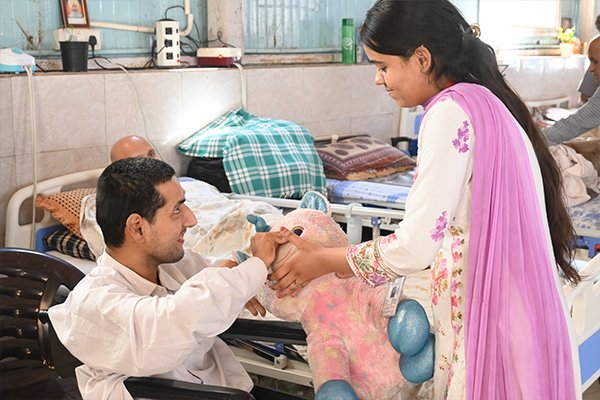
We provide what the Act promises but the state has yet to fully deliver: permanent shelter, daily
meals, round-the-clock medical care, rehabilitation, and dignified last rites for individuals who
have been abandoned, are destitute, or have no family willing to care for them. Our facility in
Gurugram shelters over a thousand residents at any given time. We operate entirely on public
donations and volunteer support.
We do not see ourselves as a replacement for the state’s obligations. We see ourselves as
evidence of their urgency. Every person in our care is a person the system did not reach in time.
If this Act were fully funded, properly staffed, and universally known, fewer people would need
us. Until that day, we will be here.
If you or someone you know is in a situation of elder neglect or abandonment, please reach out
to us directly.
Disclaimer: This article is intended for informational purposes only and does not constitute legal advice.
The provisions described are based on the Maintenance and Welfare of Parents and Senior Citizens Act,
2007, as in force at the time of writing, and the Amendment Bill of 2019 as introduced. For specific legal
guidance, please consult a qualified advocate or your nearest District Legal Services Authority