A practical guide for CSR heads, foundations, and companies looking to direct their social responsibility spending toward one of India’s most urgent – and most overlooked – causes.
India’s corporate social responsibility landscape has matured significantly since the Companies Act, 2013 made CSR spending mandatory for qualifying companies. Billions of rupees now flow into social causes every year. Yet one of the country’s fastest-growing humanitarian crises remains severely underfunded: the abandonment and destitution of India’s elderly.
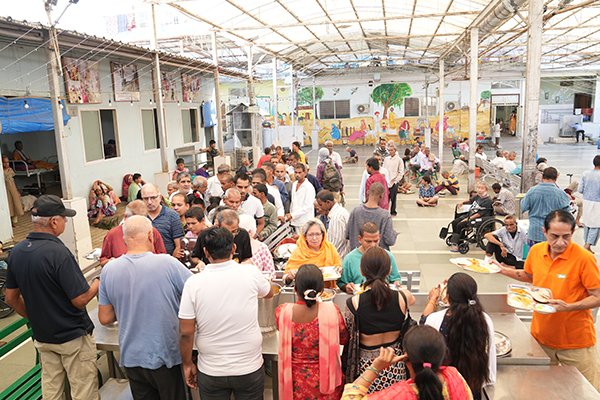
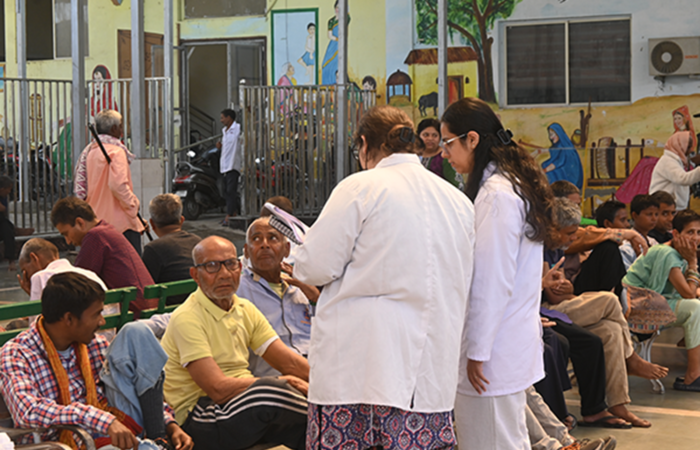
At The Earth Saviours Foundation (TESF), we have spent nearly two decades on the front lines of this crisis – rescuing, sheltering, and caring for abandoned elderly, mentally ill, and terminally sick individuals at our facility in Gurugram. We currently house over a thousand permanent residents, operate round-the-clock medical care, and provide dignified last rites for those who pass in our care. We do this almost entirely on individual donations and volunteer support.
This page is for CSR decision-makers who are looking for a high-impact, fully compliant, and operationally transparent partner in the elder care space. Below, we lay out exactly how a CSR partnership with an old age home or elder care NGO works under Indian law, what TESF offers as a partner, and the specific engagement models available to your organisation.
Why Elder Care Deserves a Place in Your CSR Strategy
Most corporate CSR portfolios in India are concentrated in three areas: education, healthcare (broadly defined), and environmental sustainability. These are important causes. But they also mean that elder care – despite being explicitly listed in Schedule VII of the Companies Act – receives a disproportionately small share of CSR spending.
Consider the scale of the problem. India’s elderly population is projected to exceed 347 million by 2050. The country has no universal long-term care system, negligible public geriatric infrastructure, and an elder abuse prevalence that multiple surveys place between 25 and 50 per cent. The number of people abandoned on streets, at railway stations, and outside hospitals is not tracked by any national database – but organisations like ours receive new cases almost every week.
For corporates, the opportunity is twofold. First, elder care is a genuinely underserved cause where even modest CSR allocations can produce outsized impact – there is far less competition for funding compared to education or child welfare. Second, elder care resonates deeply with employees and stakeholders across demographics. It is personal in a way that abstract development causes sometimes are not. Most people have an ageing parent or grandparent. The cause connects.
The Legal Framework: How Elder Care Qualifies Under Section 135
Under Section 135 of the Companies Act, 2013, every company with a net worth of ₹500 crore or more, turnover of ₹1,000 crore or more, or net profit of ₹5 crore or more in the preceding financial year is required to spend at least 2% of its average net profits on CSR activities.
Schedule VII of the Act lists the eligible activities. Elder care is explicitly covered under multiple items:
Item (i) – Eradicating hunger, poverty, and malnutrition; promoting healthcare including preventive healthcare and sanitation; making available safe drinking water. TESF provides three daily meals, 24/7 medical care, and sanitation facilities to over a thousand residents, all of whom are destitute.
Item (ii) – Promoting education and employment-enhancing vocational skills especially among the elderly and differently abled. TESF’s rehabilitation programmes, which aim to restore functional capacity and, where possible, facilitate family reunification, fall within this scope.
Item (iii) – Setting up old age homes, day care centres, and such other facilities for senior citizens; measures for reducing inequalities faced by socially and economically backward groups. This is the most directly applicable provision and covers virtually everything TESF does.
What TESF Brings to a CSR Partnership
We understand that CSR teams are evaluating multiple NGO partners and need to assess organisational credibility, operational capacity, and reporting quality. Here is what TESF offers:
Scale and Track Record
TESF has been operational since 2008. We have sheltered thousands of individuals over nearly two decades. Our Gurugram facility is one of the largest permanent shelters for abandoned and destitute people in the Delhi NCR region, housing over a thousand residents at any given time. We are not a startup NGO seeking seed funding – we are an established institution seeking partners to help us sustain and expand proven operations.
Media and Press Credibility
TESF and its leadership have been featured in the Times of India, Republic World, The Better India, BW Businessworld, Outlook India, and other national publications. Our work has been independently verified by journalists and documentary filmmakers. For CSR teams that need to demonstrate due diligence to their boards, this external validation matters.
Employee Engagement Readiness
We are equipped to host corporate volunteer groups at our facility. Our team manages logistics, briefings, and activity coordination so that your employees have a meaningful and well-organised experience – not a photo opportunity. We have hosted groups ranging from 10 to over 100 volunteers in a single visit.
Geographic Advantage
Our facility is located on the Faridabad-Gurgaon Road, Bandhwari Village, Gurugram – accessible to companies headquartered in Gurugram, Delhi, Noida, and the wider NCR. The Companies Act gives preference to CSR spending in the local area where a company operates. For any company with operations in NCR, a partnership with TESF is a natural geographic fit.
Frequently Asked Questions
Is TESF registered to receive CSR funds under the Companies Act?
Yes. TESF holds valid CSR-1 registration with the Ministry of Corporate Affairs, and is registered under Section 12A and 80G of the Income Tax Act. All contributions to TESF are eligible as CSR expenditure and qualify for tax exemption.
Can we visit the facility before committing?
Absolutely. We encourage every potential partner to visit the TESF shelter, meet our team, and see our operations first-hand before entering into a partnership. Please write to us to schedule a visit.
Can our employees volunteer at TESF?
Yes. We regularly host corporate volunteer groups. We coordinate logistics, safety briefings, and activity planning to ensure a productive and meaningful experience for your team.
Does TESF have experience working with corporate CSR programmes?
Yes. We have engaged with corporate groups for volunteer events, festival sponsorships, and donation drives. We are expanding our formal CSR partnership capacity and are structured to handle multi-year, compliance-grade engagements.
Get in Touch
If your company is exploring elder care as a CSR focus area, we would welcome a conversation. Whether you are a CSR head evaluating partners, a foundation programme officer scoping projects, or an HR leader looking for a meaningful employee engagement initiative – we are happy to share more about our work and discuss how a partnership could be structured.
Email: svearth@yahoo.com
Visit: Bandhwari Village, Faridabad–Gurgaon Road, Near TERI Golf Course, Gurugram, Haryana 122001
Website: https://earthsaviours.in/