Years of running a free shelter home teach you things no classroom ever could.
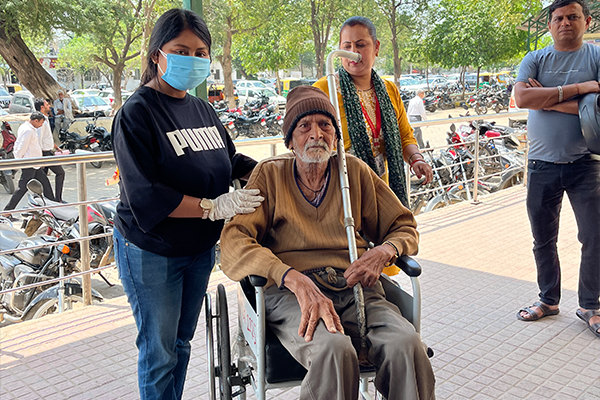
Numbers tell part of the story. Over the years that The Earth Saviours Foundation has been operating its free shelter homes in Gurugram, more than ten thousand abandoned and destitute individuals have passed through our doors. They came from different states, different religions, different walks of life. Some were elderly. Some were young people whose circumstances had collapsed in ways that left them with nothing. Many were living with untreated mental illness or physical disability. Some we could identify. Others arrived without a name anyone around them knew.
The number matters. But the number is not the learning.
The learning comes from what happens when you sit with ten thousand different stories of abandonment and begin to see the patterns – in how people arrive, in what they need first, in what takes longest to heal, in what the hardest days reveal about the nature of this work and about human beings in general.
This piece is an attempt to put some of that learning into words – not as a report, but as institutional memory. Things we know now that we did not know at the beginning. Things that have shaped how TESF operates, what we prioritise, and how we think about the people in our care.
1. The First Thing People Need Is Not Always What You Expect
When someone arrives at TESF in a state of acute destitution, the instinct – the correct instinct – is to address the most visible needs first. Food. Clean clothes. Medical attention. These are urgent and real, and we attend to them immediately.
But again and again, we have seen something that complicates the simple model of needs and their satisfaction: that for many people who have been living without care for a long time, the most destabilising thing about arriving somewhere safe is the safety itself.
When you have been fending entirely for yourself – when trust has been systematically withdrawn by every person who was supposed to provide it – being in a place where people are actively trying to help you can feel disorienting rather than reassuring. Some residents in their first days are agitated, suspicious, uncooperative. Not because they do not need help. Because they have learned, from experience, that care tends to have conditions.
What this taught us: the first thing most people need is not a meal or a clean bed. It is consistency. It is the same face appearing at the same time, doing the same reliable thing, without agenda. Trust is not given. It is demonstrated, slowly, through repetition. And at TESF, we have learned to measure our early work with new residents not in days but in weeks – patient enough to let trust arrive on its own schedule.
2. Abandonment Leaves a Wound That Food Cannot Fix
The physical consequences of destitution – malnutrition, untreated illness, exposure – are the most visible and the most straightforwardly addressed. Bodies respond to food, warmth, and medicine. They heal at a pace that is, in many cases, remarkable.
What does not heal as quickly, and what we have come to understand as the deeper wound in almost every person who arrives at TESF, is the psychological residue of having been left. Not fallen through the cracks – left. Deliberately, by people who knew them. By a son who stopped visiting. By a family that moved away and did not leave a forwarding address. By an institution that discharged them with nowhere to go.
This wound shows up in different ways. Sometimes it is grief – a quiet, persistent sorrow that surfaces unexpectedly. Sometimes it is anger, directed at whoever happens to be nearby. Sometimes it is a complete withdrawal, a person folding inward and becoming unreachable for days at a time. And sometimes it is something more subtle: a person who is physically present, eating and sleeping and going through the motions of the day, but who does not seem to believe that any of it is really for them.
What this taught us: the emotional dimension of destitute care is not a secondary concern to be addressed after the practical ones. It is the work. Everything else – the food, the shelter, the medicine – creates the conditions for this deeper work to happen. But the work itself is relational. It is the slow process of demonstrating, through daily contact, that a person has not been forgotten.
3. The Hardest Cases Are Not the Sickest Ones
You might assume that the most challenging people to care for at TESF are those with the most acute medical needs – the critically ill, the severely disabled, those requiring constant physical attention. These cases are demanding. But they are not, in our experience, the hardest.
The hardest cases are the ones where the person has not yet decided whether they want to be here. Where the combination of prolonged abandonment, mental illness, and broken trust has produced something close to indifference – not to their circumstances, but to the possibility of anything changing. These are the residents who refuse food without apparent reason. Who undo the careful work of several weeks in an afternoon. Who push away the very people trying hardest to help them.
These cases have taught us more about the nature of this work than any other. They have taught us that care cannot be conditional on cooperation. That showing up for someone who is pushing you away is not naivety – it is the point. That the people most resistant to help are often the ones who need it to be most unconditional.
And they have taught us, more than once, that breakthroughs come without warning. A person who has been unreachable for months says something one morning that tells you they have been listening all along.
4. Small Things Are Not Small
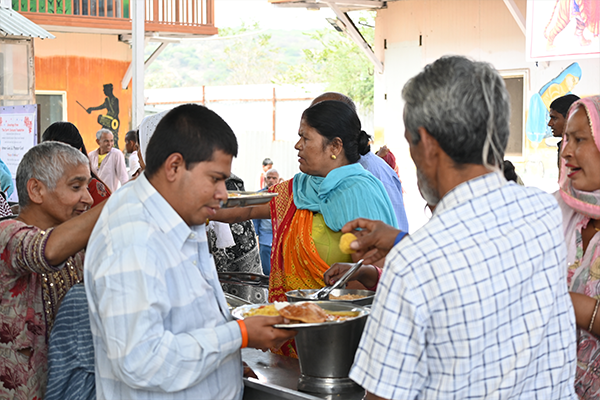
In the early years of running TESF, the focus – understandably – was on the large-scale logistics of care. Meals for dozens of people. Medical check-ups. Sourcing clothing donations. Managing the operational complexity of a 24/7 facility with limited resources.
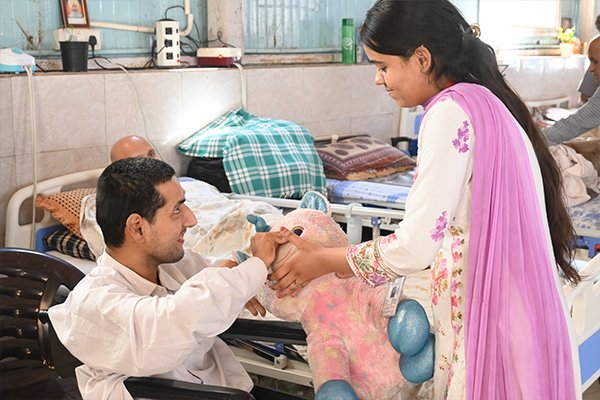
Over time, we began to notice something that the focus on logistics had partly obscured: the disproportionate impact of small gestures. Remembering that a particular resident prefers their tea a certain way. Noticing when someone is quiet in a way that is different from their usual quiet. Sitting down next to someone during a meal rather than simply delivering the food and moving on. Addressing people by name – consistently, every time.
These things are not operationally significant. They do not appear on any impact report. But for a person who has spent months or years being treated as a problem to be managed rather than a person to be known, they carry a weight that is entirely out of proportion to their apparent size.
What this taught us: the quality of care at a shelter home is not determined by its systems, as important as those are. It is determined by the texture of daily interaction – by whether the people responsible for care are paying attention, and whether that attention feels genuine. You cannot fake this. Residents know the difference.
5. This Work Does Something to the People Who Do It
We would be incomplete in our account of what TESF has learned if we did not acknowledge what this work does to those who carry it.
Running a shelter home for abandoned and destitute individuals is not emotionally neutral. The team at TESF – staff, volunteers, and the leadership – carries the weight of being, for many residents, the only reliable human presence in their lives. That is an honour. It is also a burden, and pretending otherwise would be dishonest.
There are days when a resident who had been improving suddenly declines. There are deaths – people who arrived too late for medicine to do what it might have done earlier, or who simply reached the end of a life that had been very hard. There are days when the gap between what the people in your care need and what you are able to provide feels unbridgeable.
And yet. What we have also observed, without exception, is that the people who stay in this work – who come back after the hard days, who maintain their care and attention through the weight of it – are changed by it in ways they consistently describe as the most meaningful of their lives. Something clarifies. Priorities reorder themselves. The noise of ordinary life becomes easier to distinguish from what actually matters.
The residents of TESF give us this. In allowing us to care for them, they teach us something about what it means to be human – something we did not know we needed to learn until we were standing in the middle of it.
6. The Need Does Not End – And Neither Do We
Perhaps the most important thing that years of this work have taught us is also the simplest: the need is not going away.
Destitution and abandonment are not problems that will be solved by a single organisation, a single government programme, or a single generation of committed individuals. They are the products of structural failures – in family systems, in mental health infrastructure, in elder care policy, in urban development – that will take far longer to correct than any of us will be around to see.
Understanding this could be demoralising. We have found it to be the opposite.
Because the question is never whether the problem will be fully solved. The question is whether the person in front of you today will be safe, fed, cared for, and seen. That question is answerable. It is answered, at TESF, thousands of times a year – one meal, one conversation, one act of patient, consistent presence at a time.
Ten thousand people and counting. Each one a life that mattered. Each one a reason to continue.
Be Part of What We’re Building
The Earth Saviours Foundation runs entirely on the support of people who believe, as we do, that no human being should be left entirely alone. If this work resonates with you, there are ways to be part of it – through volunteering, through donating, or simply through spreading the word to someone who might care.
Every person we reach is reached because someone chose to help. That someone can be you.