From inherited missions to independent movements – young social workers are reshaping care for India’s most vulnerable.
A Quiet Shift in Who Shows Up
Something is changing in Gurugram’s social service landscape – and it isn’t making headlines.
For decades, the city’s charitable work was carried forward by a generation of founders – retired professionals, spiritually motivated individuals, and community elders who built shelters, ran feeding programmes, and showed up at hospitals when no one else would. Their work was vital. Much of it still is.
But in the last few years, a new cohort has started to emerge. Younger. More operationally minded. Fluent in both compassion and compliance. These are the young social workers in Gurgaon who are not just continuing the work of the previous generation – they are fundamentally reshaping how it gets done.
From Legacy to Leadership: The TESF Story
At The Earth Saviours Foundation, this generational shift is not theoretical. It is the daily reality.
TESF was founded by the Late Sh. Ravi Kalra – widely known as the “No Honking Man” of Delhi – who spent years rescuing abandoned and destitute individuals from streets, railway stations, and hospitals across the NCR. What began as one man’s refusal to look away grew into one of India’s largest permanent shelters for the abandoned elderly, mentally ill, and terminally sick, operating from Gurugram with the capacity to house over a thousand residents.
Today, the foundation is led by his son, Jas Kalra, who took on the role of President while still in his twenties. Jas represents a pattern we are seeing more and more – a young social activist in Gurgaon who did not stumble into the work through a sudden epiphany, but grew up inside it. He spent his formative years in the shelter, surrounded by residents, volunteers, and the operational demands of running a facility that never closes. The transition from observer to leader was not a career pivot – it was an inevitability.
But what makes Jas’s approach distinctive is not simply that he inherited the mission. It is what he has done with it. Under his leadership, TESF has expanded its medical rehabilitation programmes, formalised its volunteer intake and training systems, and begun building institutional frameworks that can outlast any single individual. This is not the charity model of old – it is social infrastructure.
What Makes This Generation Different
The older model of social work in India – particularly for smaller NGOs and shelters – was often deeply personal. Founders ran everything. Fundraising was relationship-driven. Documentation was minimal. The work survived on willpower.
The new generation is not less passionate. But it brings a different toolkit.
Today’s inspiring social workers in Gurgaon are thinking about systems. They ask: how do we make this shelter survive a leadership transition? How do we build medical protocols that don’t depend on one doctor’s personal commitment? How do we train volunteers so that institutional knowledge doesn’t walk out the door every quarter?
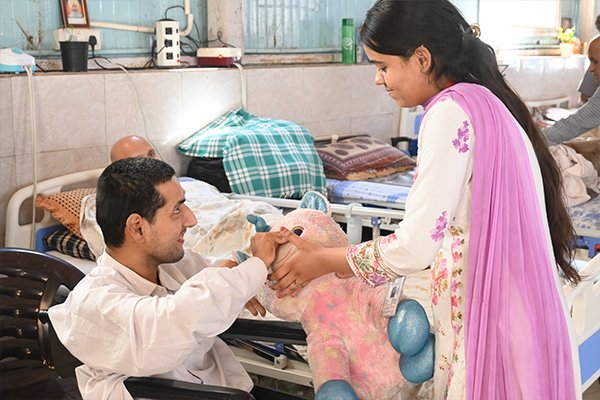
At TESF, this has translated into tangible changes. A structured medical intake process for new residents. A rehabilitation-first approach to care, where the goal is not just shelter but recovery and, where possible, family reunification. A growing digital presence that treats transparency not as an obligation but as a value – showing supporters exactly where their contributions go and what they enable.
This is not unique to TESF. Across the city, a number of famous social service workers in Gurgaon – both established figures and emerging ones – are bringing operational rigour to organisations that were built on heart alone. The combination is powerful: the emotional commitment of the founders, reinforced by the institutional discipline of a generation raised on data, accountability, and scale.
The Problem That Won’t Wait
This generational shift matters because the crisis is accelerating.
India’s elderly population is growing faster than the social systems designed to support it. According to the Ministry of Statistics, the number of Indians aged 60 and above is projected to reach 347 million by 2050. Yet the country has no universal old-age care infrastructure, negligible state-funded geriatric services, and an elderly abuse rate that multiple surveys place high on the meter. According to HelpAge India’s Elder Abuse in India – 2018 report, one in four elderly Indians reported experiencing abuse — and 82 per cent of those cases went unreported.
Elder abandonment – the practice of families leaving ageing, ill, or disabled relatives at hospitals, railway stations, or simply on the street – is not a fringe phenomenon. It is a structural failure. And in cities like Gurugram, where rapid urbanisation has fractured traditional joint-family systems, the problem is especially acute.
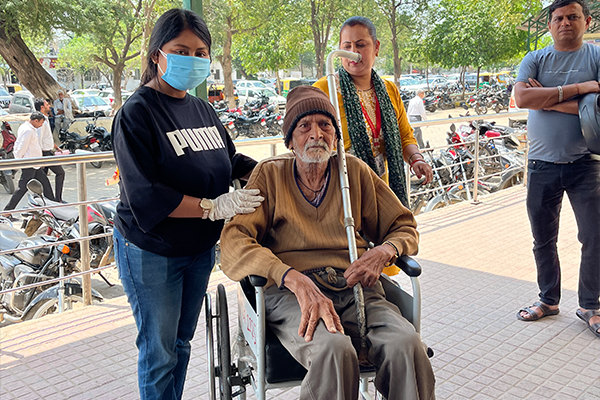
TESF receives new residents almost every week – individuals found abandoned, often in critical medical condition, with no identification and no family willing to claim them. The foundation provides what the state does not: permanent shelter, three meals a day, round-the-clock medical attention, and, when the time comes, dignified last rites. These are not temporary interventions. For most residents, TESF is the last home they will know.
Why It Takes Young Energy to Solve Old Problems
The scale of India’s elder care crisis cannot be addressed by goodwill alone. It requires the kind of sustained, operational commitment that only institutions can provide – and institutions need leaders who think in decades, not donation cycles.
This is where the new generation of social workers in Gurgaon becomes essential. They are not just filling a gap left by the previous generation – they are building for a future where the gap will be far wider. India’s demographic curve guarantees it.
At TESF, Jas Kalra often says that the goal is not to be the biggest shelter in the country, but to be the one that proves permanent, dignified care for the abandoned is possible at scale – and replicable. That ambition requires a different kind of social worker: one who can manage a medical facility, train a volunteer corps, run a transparent financial operation, and still sit with a resident at 2 a.m. when they cannot sleep.
It is a demanding ask. But the people answering it are already here, already working, and already redefining what social service looks like in one of India’s fastest-growing cities.
How You Can Be Part of This Story
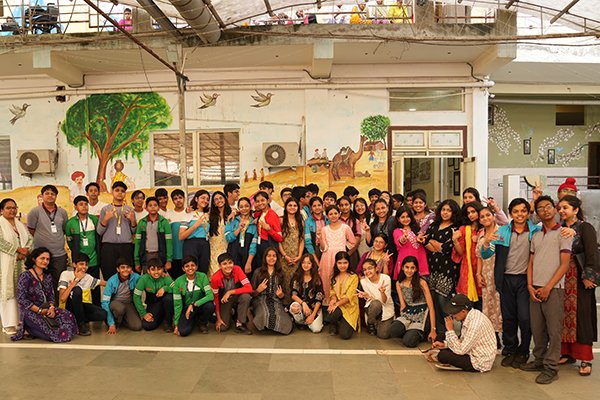
The Earth Saviours Foundation runs entirely on public donations and volunteer support. If the work described here resonates with you, there are several ways to contribute: sponsor a resident’s monthly care, volunteer your time or professional skills at the Gurugram shelter, or simply share this story with someone who should read it.
The generation doing this work is young, committed, and clear-eyed about the scale of the challenge. What they need most is not applause – it is participation.