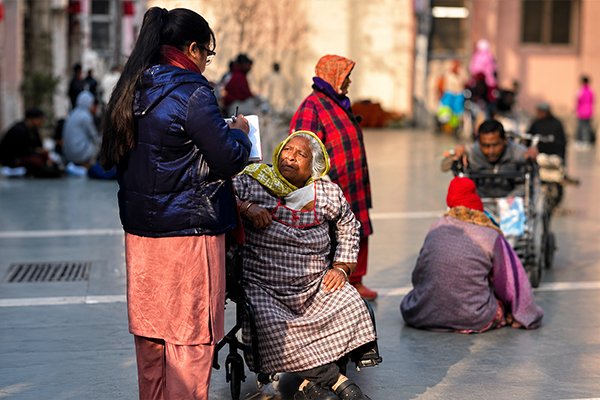
India is getting older. That is not a metaphor. It is a demographic fact that the country has not yet fully reckoned with. According to the United Nations Population Fund, India’s elderly population, people aged 60 and above, is expected to reach 319 million by 2050. Right now, that number stands at around 140 million. These are not just statistics. Behind every digit is a person who spent decades building a family, raising children, contributing to their community, and now finds themselves at a point in life where they need support in return.
The problem is that the support is simply not there for a large number of them.
This is where social work NGOs in India are stepping in. And this is where organisations like TESF are doing some of the most important work happening on the ground today.
The Joint Family System Is Changing
For generations, India’s answer to elderly care was the joint family. Grandparents lived with their children and grandchildren. They were fed, respected, included. Care was a shared responsibility, woven naturally into daily life.
That system has not disappeared, but it is under enormous strain. Rapid urbanisation means that younger generations are moving to cities for work, often hundreds of kilometres away from their hometowns. Nuclear families have become the norm in most metros. Economic pressures mean that many households simply cannot afford to have an elderly parent at home without dedicated support. And in some cases, social attitudes have shifted in ways that have left elderly people increasingly isolated.
The result is a generation of older Indians who are facing their later years without adequate care, without financial security, and in too many cases, without anyone to look out for them at all.
What Happens When There Is No Safety Net
The consequences of this breakdown are visible if you know where to look. Elderly people are among the most vulnerable groups in India’s homeless population. Many end up on the streets after the death of a spouse, a family dispute, or simply because they outlived the network of people who once cared for them.
Others live in conditions of quiet neglect, technically housed but without nutrition, medical care, or meaningful human contact.
The Indian government runs some programmes aimed at elderly welfare, and state governments have varying levels of provision for old age support. But the scale of the need vastly outpaces what government infrastructure can address. That is the gap that NGOs for elderly care in India exist to fill. And that gap is enormous.
TESF’s Approach to Elderly Care
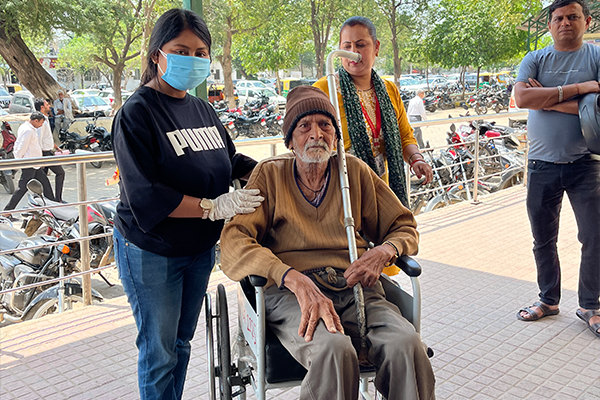
TESF, or The Earth Saviours Foundation, is a social work NGO in India working at precisely this intersection of urgent need and insufficient state provision. The organisation runs programmes focused on elderly care, shelter for homeless individuals, and support for disabled persons across Delhi NCR and beyond.
What sets TESF apart is not just what it does, but how it does it. Rather than treating elderly beneficiaries as passive recipients of charity, TESF’s model is built around dignity. The goal is not just to keep people alive and housed. The goal is to make sure they feel seen, valued, and cared for as human beings.
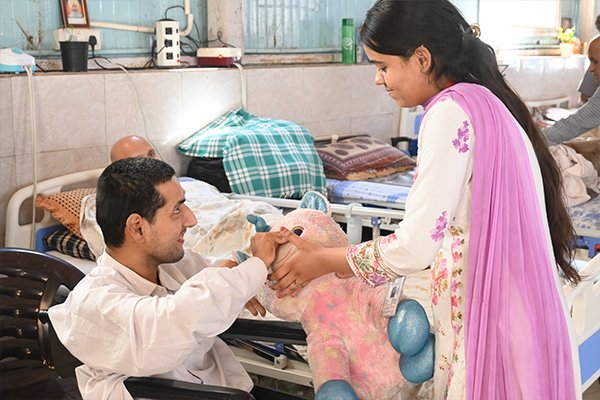
This means regular health check-ups and medical support. It means nutritious meals and clean living spaces. It means recreational and social programmes that combat isolation. And it means a trained, compassionate staff that understands the emotional and psychological dimensions of caring for elderly people, not just the physical ones.
The Homeless Elderly: India’s Most Overlooked Population
There is a subset of elderly people in India whose situation is even more acute: those who are entirely homeless. India’s shelter homes for homeless people are often designed without specific provision for elderly individuals, who have different physical and medical needs from younger homeless populations.
TESF works across shelter home operations in Delhi NCR, providing beds, food, and basic medical care to homeless elderly individuals. The number of people who need this kind of support is consistently higher than available capacity, which is why ongoing donation and community support is critical to sustaining the programme.
If you have ever searched for a shelter home in Delhi NCR that genuinely addresses the needs of older homeless individuals, TESF’s work represents one of the few serious ground-level responses to that specific gap.
Caring for Disabled Persons Too
Elderly care and disability support often intersect in profound ways. Many elderly individuals live with physical or cognitive disabilities. And a significant number of disabled persons in India lack any form of institutional or community support.
TESF’s programmes for disabled persons in India are built on the same foundation as its elderly care work: dignity, inclusion, and practical daily support. This means vocational training where appropriate, assistive resources, medical coordination, and a consistent human presence that prevents the kind of isolation that so often accompanies disability in India’s social context.
How You Can Help: Donate Food to Elderly People in India
The most immediate way most people can contribute is through food. Donating food to elderly people in India does not require grand gestures. TESF runs regular food donation programmes that allow individuals, families, businesses, and community groups to contribute meals or grocery supplies directly to elderly beneficiaries.
You can donate to an old age home online in India through TESF’s website. The process is straightforward, payments are transparent, and every contribution is tracked against specific programme outcomes. Whether you are giving a one-time amount or setting up a monthly donation, the money goes directly toward the people who need it.
For corporate donors and CSR programmes, TESF also coordinates larger-scale food drives, health camps, and programme sponsorship. If your organisation is looking for a credible NGO partner for elderly care in India, TESF’s track record and programme structure make it a strong candidate.
Why This Matters Right Now
India will not be able to ignore its elderly care crisis for much longer. The numbers are too large and the consequences of inaction too visible. But in the years before policy catches up with need, it is organisations like TESF doing social work in India who are holding the line.
Every shelter bed that gets filled, every meal that gets served, every medical check that gets done is the result of people deciding that elderly and vulnerable Indians deserve better than invisibility.
You can be part of that.
Donate online to TESF today and support elderly care, homeless shelter, and disabled persons programmes across India. No amount is too small, and every contribution reaches someone who genuinely needs it.
TESF (The Earth Saviours Foundation) is a registered NGO for elderly care in India operating shelter homes and support programmes in Delhi NCR. To donate, volunteer, or learn more about partnership opportunities, visit [tesf website link].