Behind the glass towers and the hustle, a quieter and harder reality – and the people trying to address it.
If you search for Gurugram online, you will find a city defined by superlatives. The highest concentration of Fortune 500 offices outside Delhi. One of the fastest-growing real estate markets in North India. A city of flyovers, coworking spaces, international schools, and gleaming malls that stay open until midnight.
This is not false. Gurugram has, in the space of two decades, transformed from a satellite town into one of India’s most economically significant cities. The numbers are real. The skyline is real. The opportunity that draws hundreds of thousands of people here every year is real.
But there is another Gurugram. It exists on the margins of the one that gets written about – in the stretches of pavement between construction sites, in the lives of people for whom the city’s prosperity is entirely out of reach, in the quiet tragedy of men and women who arrived here looking for something and ended up with nothing and no one.
This is the Gurugram that The Earth Saviours Foundation works in. And this piece is about what that work has revealed about a city that prefers not to look too closely at its own margins.
How Prosperity and Destitution Coexist
It is tempting to think of destitution as a rural problem – something that belongs to drought-affected villages, to Bihar or Odisha, to places the development story has not yet reached. Urban India, and particularly a city like Gurugram, can seem too busy and too prosperous to have this problem.
This assumption is wrong, and it is costly. Urban destitution is not the same as rural poverty, but it is just as real and in many ways harder to address. Cities generate wealth and they generate exclusion simultaneously. The same economic forces that create high-paying jobs also create a class of people who are simply not included in the opportunity – whose age, health, mental state, or circumstances place them entirely outside the city’s productive systems.
In Gurugram, this takes specific forms. There are elderly individuals who came to the city with their children and were left behind when circumstances changed. There are migrants who arrived for work, fell ill or were injured, and found themselves stranded – without income, without community, without the rural family network that might have caught them at home. There are people with mental illness who, in the absence of adequate urban psychiatric infrastructure, end up living on streets for years at a time.
These people live in the same city as the corporate offices and the luxury apartments. They are not far away. They are on the median strip of a highway you drive every day, or outside the hospital where you go for a check-up, or in the colony behind the mall that everyone in the neighbourhood knows not to walk through at night.
What the City Provides – and What It Does Not
Gurugram’s rapid development has been largely infrastructure-led: roads, metro connectivity, commercial real estate, residential towers. The city has grown in ways that serve its working population extremely well.
Its social infrastructure has not kept pace. Government-run shelter homes for destitute individuals in the Gurugram-Haryana region are chronically under-resourced, operating with limited staff and facilities that are frequently overwhelmed by demand. Mental health services in the public sector are sparse. The systems that might catch a person before they fall into complete destitution – community health workers, social welfare outreach, functional local NGO networks – are thin on the ground.
This gap is not unique to Gurugram. It is the characteristic failure of India’s fastest-growing cities: the pace of economic development consistently outstrips the pace of social development, leaving behind a class of people for whom neither the market nor the state has an adequate answer.
Into that gap, organisations like The Earth Saviours Foundation step. Not because they should have to – a city of Gurugram’s wealth and profile should have the social infrastructure to handle this – but because someone has to, and no one else is.
Who TESF Finds on Gurugram’s Streets
The Earth Saviours Foundation has been operating its free shelter homes in Gurugram for years, and in that time the team has developed a clear, if sobering, picture of who the city’s destitute population actually is.
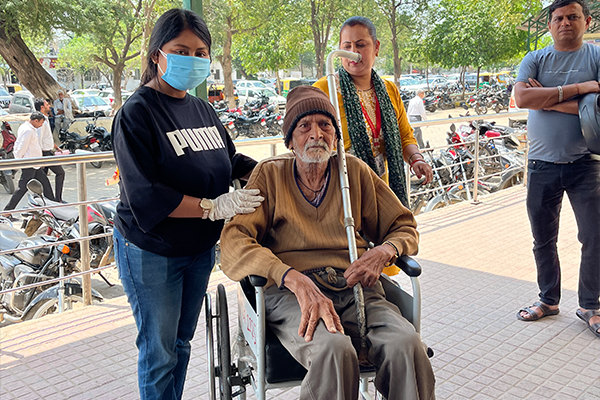
A significant proportion are elderly – men and women in their sixties, seventies, and eighties who have been left by their families. Some were abandoned deliberately. Some were separated from relatives during a move or a hospitalisation and never reconnected. Some are simply at an age and state of health where their families found caring for them too difficult, and the decision to leave was made quietly and without announcement.
A substantial number are individuals living with untreated mental illness. These are people who, in many cases, had families and lives and routines – and who, as their mental health deteriorated and treatment remained inaccessible, gradually lost all of that. By the time TESF finds them, they may have been living on the streets for months or years, entirely without support.
Others are people with physical disabilities who were left because they became too much to care for. Migrant workers who fell through every net. People whose circumstances collapsed faster than any system could respond.
The common thread is not poverty in the narrow financial sense. It is the complete absence of anyone who will take responsibility for them. That is what destitution, in its truest form, means – not just the absence of money, but the absence of anyone who will say: this person is mine to care for.
What TESF Does – and Why It Matters for Gurugram Specifically
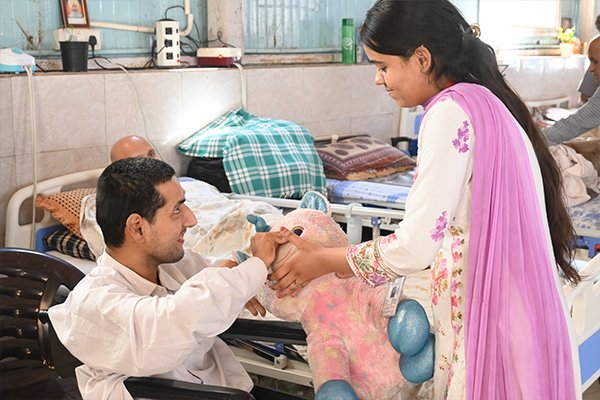
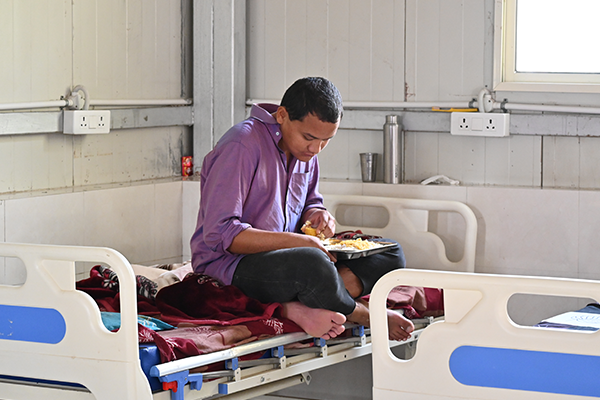
The Earth Saviours Foundation operates free, permanent shelter homes in Gurugram that run 24 hours a day, every day of the year. Residents receive food, clothing, medical care, and a stable living environment – without conditions, without documentation requirements, without a waiting list that sends people away.
For Gurugram specifically, TESF is not simply one NGO among many doing social work in the city. It is, in practical terms, the primary organisation addressing this particular population. The scale of need that passes through TESF’s doors – thousands of individuals over the years – is a direct reflection of the scale of the gap that exists in the city’s social infrastructure. The most important recognition comes from the city itself – from the police officers and hospital staff who now know to call TESF when they encounter someone who has no one, from the volunteers who show up regularly because they have seen firsthand what the organisation does, from the residents who call it home.
In a city that moves as fast as Gurugram does, TESF is the organisation that stops. That slows down enough to see the person on the pavement, to learn their name, to make sure they eat today.
The Gurugram Most People Never See
There is a version of Gurugram that its residents and its admirers are comfortable with. It is the version of gleaming office parks and Sunday brunches and Rapid Metro connectivity and start-up culture. It is a version worth being proud of, in many respects – it reflects genuine economic achievement and genuine ambition.
But cities are not defined only by their successes. They are also defined by what they choose to see and what they choose to ignore. A city that does not look at its destitute population is not simply failing those people – it is also failing itself, choosing comfort over honesty and convenience over conscience.
Making it visible is part of what TESF does. Not to shame the city, but to ask it to be everything it is capable of being.
What Gurugram Can Do
If you live or work in Gurugram and this piece has landed with you – if you recognise the city being described here and feel the pull of wanting to respond – there are ways to be part of changing what the city looks like for its most forgotten people.
You can volunteer at TESF’s shelter homes. You can donate to support the daily costs of food, medicine, and care for residents who have no means of their own. You can bring your company’s CSR resources to an organisation that will put every rupee directly to work. You can simply tell someone else about what is happening here – because awareness is where every other form of action begins.
Gurugram is a city that has built remarkable things in a very short time. There is no reason it cannot build something remarkable in its social sector too.
It starts with deciding to look at the side of the story nobody talks about – and then deciding not to look away.