We are building one of the world’s largest free shelters.
When complete, it will house over 5,000 people – abandoned senior citizens, individuals with physical and mental disabilities, survivors of abuse and trauma, people battling chronic and terminal illness – all under one roof, all entirely free of charge. It will have medical facilities, rehabilitation spaces, kitchens capable of serving thousands of meals a day, and enough capacity to make our current operations look small.
And we need to be honest about something that we don’t say enough in the language of press releases and campaign launches:
We don’t know if it will be enough.
In fact, we are fairly certain it won’t be.
Not because of anything wrong with the facility. Not because of a failure of planning or will or resources. But because the problem we are trying to solve is not, at its root, a problem of shelter capacity. It is a problem of what kind of society India is choosing to become. And no building – however large, however well-equipped, however lovingly run – can solve that alone.
This is the conversation we believe India needs to have. And we are choosing to have it in public, because we think honesty about scale is more useful than optimism about solutions.
How We Got Here
The Earth Saviours Foundation was started in 2008 by our founder, the Late Shri Ravi Kalra, with a simple and radical premise: that no one should be left to die on the street. That every human being, regardless of age, ability, identity, or family status, deserves food, shelter, and dignity.
It began small, as acts of conscience often do. A few rescued individuals. A rented space. A kitchen. A medical room. Word spread – not through advertising, but through the informal networks of people who encounter India’s most vulnerable: police constables, hospital workers, social workers, strangers who stopped on the side of a road because they couldn’t keep driving past what they saw.
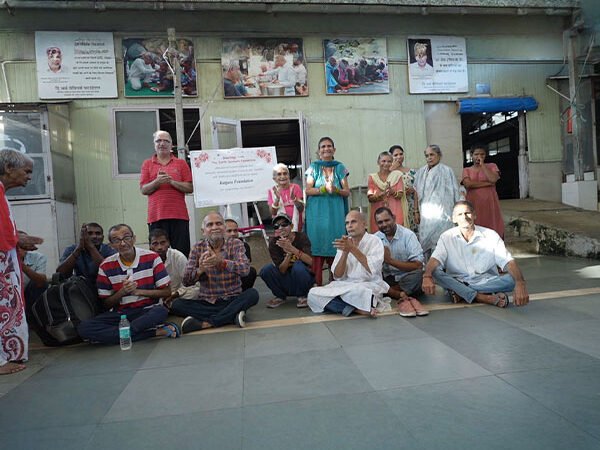
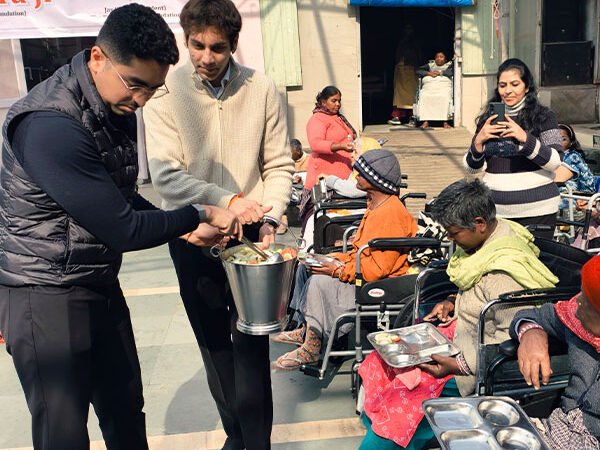
Seventeen years later, we house over 1,300 residents across two campuses. We have rescued more than 25,000 lives. We serve 16.5 million meals and counting. We have reunited 10,000 people with their families. We have performed 12,500 dignified cremations for unclaimed bodies who would otherwise have had none.
We have grown because the need has grown. Or rather – because the need was always there, and we kept saying yes when we could have stopped.
Every expansion we have ever made has been absorbed immediately. Every new bed filled. Every new ward occupied. The shelter has never once been underused. If anything, the waiting – the knowledge of how many people are still out there – has always outpaced our capacity to respond.
This is the context in which we are building for 5,000.
What 5,000 Actually Means
Let us put the number in perspective.
India is home to approximately 140 million people over the age of 60. Conservative estimates suggest that tens of millions of them live in conditions of neglect, isolation, or outright abandonment. The number of Indians living with severe mental illness who receive no treatment or support runs into the millions. The number of people with physical disabilities who have no institutional care available to them is staggering.
Against this backdrop, 5,000 beds is not a solution. It is a statement.
It is a statement that says: this is what care at scale can look like. This is the standard. This is what a facility built on dignity rather than containment, on healing rather than management, can achieve when given the resources and the will.
We believe that statement matters. We believe that demonstrating what is possible – concretely, visibly, at a scale that cannot be dismissed – is one of the most important things an organisation like ours can do.
But we also believe in telling the truth. And the truth is that 5,000 beds, in a country of 1.4 billion people facing a deepening crisis of elder abandonment, disability neglect, and mental health infrastructure collapse, is a beginning. An important beginning. A beginning that required seventeen years of work and will require enormous ongoing resources to sustain. But a beginning nonetheless.
The Crisis That Is Still Growing
India’s abandonment crisis is not static. It is accelerating.
Urbanisation is dismantling the joint family system at a pace that social infrastructure has not kept up with. Young people move to cities for work – which is natural, which is necessary – and the elderly parents they leave behind in villages or in urban apartments find themselves increasingly isolated. The physical distance becomes emotional distance becomes, over time, abandonment.
Mental health care in India remains catastrophically underfunded. The ratio of psychiatrists to population is among the lowest in the world. Community-based mental health support is almost nonexistent in most of the country. The result is that people with serious mental illness who cannot be managed at home end up on the street – where they are eventually found by police or concerned strangers and, in the NCR region, referred to us.
The formal social security system for India’s poorest elderly – the widow pension, the disability allowance, the old age pension – exists on paper but reaches too few people, too slowly, in amounts too small to make a meaningful difference. For those who fall outside even these inadequate nets, there is often nothing.
Meanwhile, the numbers grow. The cities get larger. The families get smaller. The infrastructure stays the same.
We are not building for the crisis as it is today. We are building for the crisis as it will be in ten years. And even then, we are building for a fraction of it.
What Would Actually Be Enough
We want to be direct about this, because we think clarity is more valuable than comfort.
What would actually be enough is not more NGOs doing what we do. What would be enough is a India in which the circumstances that bring people to our gates are rarer – not more efficiently managed, but genuinely rarer.
That requires things that are outside our direct power to create.
It requires a national policy framework on elder care that treats abandonment as a social emergency rather than a family failure. It requires community-based mental health infrastructure that reaches people before they reach crisis. It requires caregiver support programmes that acknowledge the impossible pressure placed on families who are trying to cope without resources. It requires government shelter homes with real capacity, real staffing, and real standards – not the overcrowded, underfunded facilities that currently exist as a last resort before the street.
It requires, fundamentally, a cultural shift: a willingness to look at the people our society discards and to ask not just how we house them, but why we are producing them in such numbers.
We cannot build that. No NGO can. It requires political will, public investment, and a national conversation that is honest about what is happening at the margins of Indian society – at the places where family ends and nothing else begins.
Why We Are Building Anyway
If we know the shelter won’t be enough, why are we building it?
Because the 5,000 people who will live there deserve to exist. Because every year we delay, people die on streets who didn’t have to. Because demonstrating what is possible is itself a form of advocacy – a proof of concept that government and society can look at and say: this is the standard, now let us build toward it.
Because our founder, Shri Ravi Kalra, spent his life refusing to let perfect be the enemy of good. He did not wait for the government to fix the problem. He did not wait for cultural change to make his work unnecessary. He looked at a person lying on a pavement and brought them home. And then he did it again. And again. Until what began as one man’s conscience became an institution housing over a thousand people.
We carry that legacy forward. Not with the illusion that we can solve everything, but with the conviction that we can solve something – and that something, to the person it saves, is everything.
We are building for 5,000 because those 5,000 lives are real. Because their dignity is not conditional on whether the broader crisis has been resolved. Because waiting for the perfect solution is, in practice, a choice to let people die.
So we build. Knowing it won’t be enough. Building anyway.
What We Are Asking
We are asking India to do two things simultaneously.
The first is to support this shelter. To donate, to volunteer, to partner with us through CSR, to visit and witness and carry what you see back into your communities and your conversations. The facility we are building will require sustained funding and sustained human presence. It will require people who believe that the forgotten deserve more than survival – that they deserve a life.
The second – and this is harder – is to ask the larger question. To look at what organisations like ours are doing and ask why it falls to us. To demand from policymakers, community leaders, and cultural institutions a genuine reckoning with abandonment, with the failures of care, with the gap between the India we describe and the India people like our residents actually inhabit.
We can build a shelter for 5,000. We cannot build the political will to prevent the next 50,000 from needing one. That requires all of us.
A Final Word
There is a question we are sometimes asked, by journalists and donors and well-meaning visitors, that we have never quite known how to answer simply.
Do you think you’ll ever solve this?
The honest answer is no. Not us alone. Not in our lifetimes. Perhaps not in the lifetime of anyone alive today.
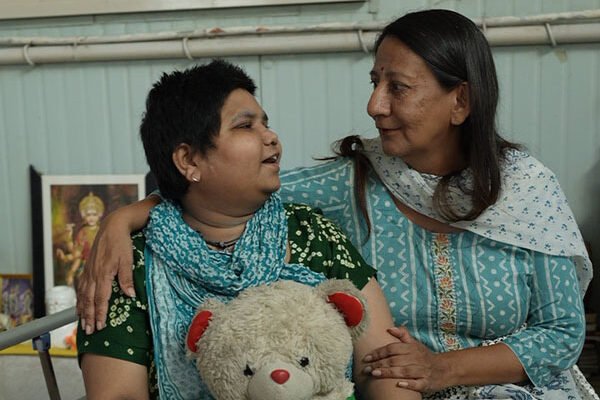
But we have also watched a man who arrived at our gates with no name, no history, and no expectation of tomorrow – sit in the morning sun, two years later, and laugh at something a friend said. We have watched the silence of abandonment give way, slowly, to the noise of a life being lived.
And we have learned, from the people we serve more than from anything else, that the question is not whether you can solve everything.
The question is whether you show up.
We will keep showing up. We hope you will too.