There is a particular kind of silence that settles over a person who has been left behind.
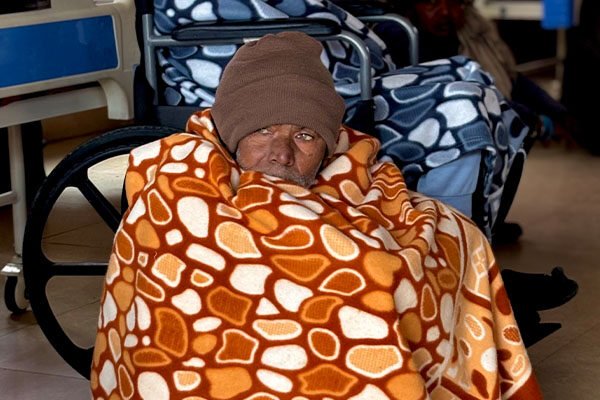
Not the silence of peace. Not the silence of rest. It is the silence of someone who has stopped expecting anyone to come. Who has learned, through experience rather than choice, that calling out no longer changes anything. That the door will not open. That the phone will not ring.
At The Earth Saviours Foundation, we see this silence when residents first arrive. We have learned to recognise it. And over seventeen years of working with India’s most abandoned and forgotten individuals, we have come to understand something that medical charts and welfare statistics rarely capture:
The deepest wound of abandonment is not physical. It is emotional. And in senior citizens, it is devastating in ways our society has barely begun to reckon with.
Abandonment Is Not Always Loud
When most people imagine elder abandonment, they picture a dramatic moment. A family argument. A door slammed. A deliberate act of cruelty.
The reality we witness every day is quieter and, in many ways, harder to address.
For many of the senior citizens who arrive at our shelter, abandonment happened gradually. A son who visited less and less. A daughter-in-law who stopped including them in family meals. A slow drift from the centre of family life to its margins – from the main bedroom to a back room, from the dining table to a tray brought occasionally, from being consulted to being tolerated, from being seen to being managed.
And then, one day, not seen at all.
Some of our residents were brought to hospitals and never collected. Some were asked to wait somewhere while a family member ran an errand – and the family member never returned. Some simply found themselves, after a lifetime of contribution and care, alone in a city that did not know their name.
The act of abandonment, in most cases, did not take a single day. It took years. And every year of it left a mark.
What Abandonment Does to the Mind and Heart
The emotional consequences of abandonment in older adults are severe, well-documented, and chronically under-treated.
The collapse of identity. For most of their lives, our residents were someone’s parent, someone’s spouse, someone’s elder, someone’s anchor. Their identity was inseparable from their role in a family and community. When that family disappears, so does the self that was built around it. Many residents arrive not knowing how to answer the question: Who are you? – not because of cognitive decline, but because the relationships that gave them an answer are gone.
Profound, persistent grief. Abandonment by family is a bereavement that our culture does not recognise as such. There is no funeral. No acknowledgement. No socially sanctioned period of mourning. The person is simply gone from your life while still alive in the world – and you are left with a grief that has no name and no end. We see this grief in our residents every day. It surfaces in unexpected moments: during festivals, when they watch other families together; on birthdays that pass without a call; in the quiet after meals, when the table empties and the silence returns.
Loss of trust. The family is, for most humans, the primary source of safety in the world. When that source fails – when the people who were supposed to love you unconditionally become the people who left you – the damage to one’s capacity to trust is profound. Many residents arrive unable to accept kindness without suspicion. They flinch from care. They wait for the condition, the withdrawal, the moment when this too will be taken away. Rebuilding that trust is not a programme. It is a daily, patient, years-long act.
Depression and withdrawal. Clinical depression is significantly more prevalent in abandoned elderly individuals than in the general older population. It manifests not always as visible sadness but as withdrawal – a flattening of engagement, a loss of appetite, a disinterest in interaction. The person who has been abandoned often becomes, in their own mind, someone not worth the effort of being present for. We have watched this. We have sat with it. And we have watched it – slowly, carefully, with consistent care – begin to lift.
Physical consequences of emotional pain. The connection between emotional and physical health in older adults is not metaphorical. Chronic loneliness and grief suppress immune function, disrupt sleep, and accelerate cognitive decline. Some research suggests that the health impact of persistent loneliness is comparable to smoking fifteen cigarettes a day. The senior citizens who arrive at TESF are often physically unwell – but the emotional wounds frequently run deeper than anything we can see on an intake form.
What Healing Actually Looks Like
We want to be honest about something: we cannot undo what happened to our residents before they came to us. We cannot give back the decades of family life that were withdrawn. We cannot make the grief disappear.
What we can do – what we have learned to do, over seventeen years and more than 25,000 lives – is create the conditions in which healing becomes possible.
It begins with safety. When a person knows that the meal will come tomorrow, that the roof will hold, that no one is going to ask them to leave – something in the body begins to unclench. The constant low-level alarm of survival quiets enough for something else to emerge.
Then it requires consistency. The same faces, the same routines, the same small daily acknowledgements – good morning, how did you sleep, have you eaten? – repeated not once but hundreds of times. Trust is not rebuilt in a single act of kindness. It is rebuilt in the accumulation of ordinary moments that don’t betray.
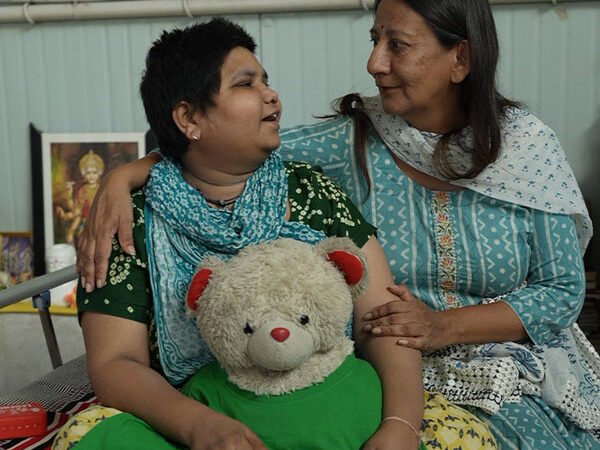
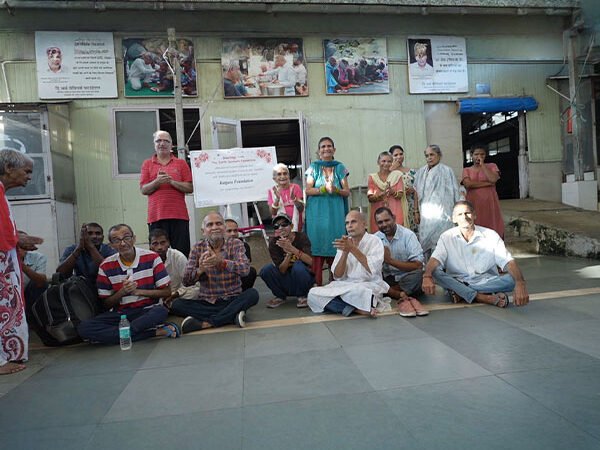
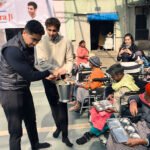
Then it requires belonging. This is perhaps the most powerful thing TESF offers, and the hardest to explain to someone who hasn’t seen it. Our residents build community with each other in ways that are genuine, warm, and often surprising. The community is not a replacement for family – nothing is – but it is real. It is present. And for many residents, it becomes the first place in years where they feel that their existence matters to someone.
We have watched people arrive silent and leave – not physically leave, but emerge – loud, opinionated, invested in their ward, in their friendships, in tomorrow’s cricket match. We have watched the expression in someone’s eyes change from the blankness of long resignation to something that looks, unmistakably, like interest in being alive.
This is what we work toward. Not the dramatic rescue – though rescue is where it starts – but this. The slow, quiet return of a person to themselves.
What India Needs to Understand
Elder abandonment is not a fringe issue. It is not confined to the very poor or the very desperate. It is happening across every economic class, every region, every community in India – in ways that our cultural narratives about family love and filial duty make it almost impossible to discuss openly.
The senior citizens in our shelter are not cautionary tales. They are not the unfortunate exceptions. They are the visible tip of a vast and growing crisis that India must stop looking away from.
Every family that is quietly struggling to care for an ageing parent deserves support – not shame, not abandonment of their own. Every senior citizen deserves not just shelter and food, but emotional care, dignity, and community. Every person who grows old in this country deserves to do so knowing that they will not be discarded when they become difficult to accommodate.
This is not charity. It is the basic measure of what kind of society we choose to be.
If You Have Been Left Behind
If you are an elderly person who is alone, or a family member watching someone they love slip into isolation – please know that help exists. Please know that what you are experiencing has a name, and that the shame you may feel is not yours to carry.
At The Earth Saviours Foundation, no one is turned away. No one is judged. No one is asked to earn their place here.
You are welcome. You are seen. You are home.
The Earth Saviours Foundation operates two free shelter homes in Gurugram, Haryana, providing 24/7 care – food, medical support, emotional care, and dignity – to over 1,300 abandoned and destitute individuals. Since 2008, we have rescued over 25,000 lives.