There is a cremation that stays with you.
Not because it was dramatic. Not because anything unusual happened. But because of the silence around it – the particular silence of a farewell that no one came to witness. No family. No friends. No one who knew the person’s name, their history, the sound of their laugh, or the city they were born in.
Just our staff. A prayer. A flame.
And the quiet, heavy knowledge that this person lived a full human life – and left it entirely alone.
At The Earth Saviours Foundation, this is not a rare occurrence. It is part of our daily reality. Through our Karmic Seva initiative, we have performed dignified last rites for over 12,500 unclaimed, unidentified individuals since our founding. People found on roadsides, in hospital corridors, on railway platforms. People whose families could not be traced – or who had families that simply did not come.
We do not share this number as an achievement. We share it as a weight. As a measure of something that is happening in India’s cities that we have not yet found the courage, as a society, to look at directly.
Who These People Were
Many of the individuals we cremate through Karmic Seva were, in life, elderly. Abandoned senior citizens who had outlived their usefulness in someone’s calculation. Men and women who had raised children, built homes, worked through decades of an independent India – and found themselves, at the end, unclaimed.
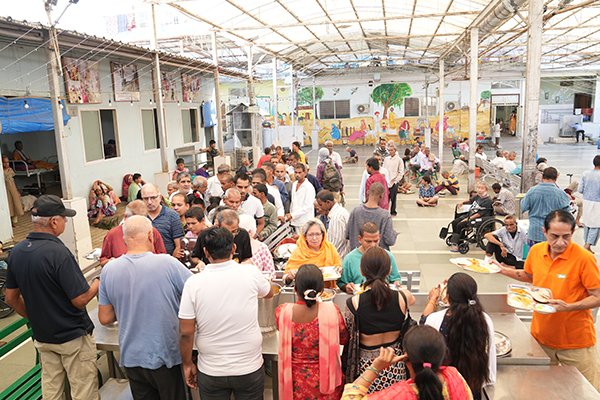
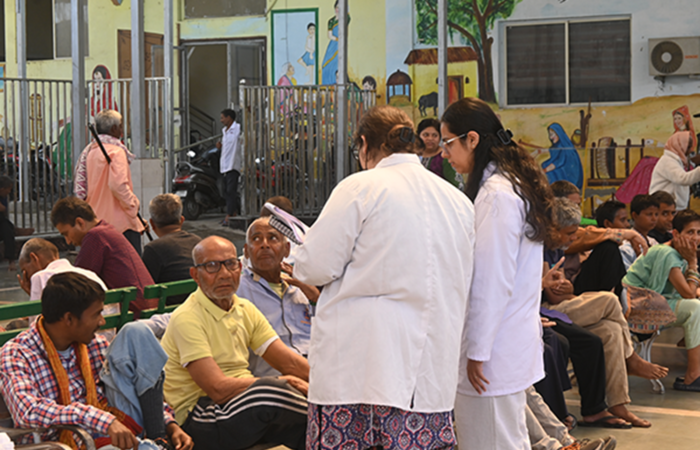
This is the part of our work as an NGO for old age that no brochure adequately captures. The shelter, the meals, the medical care – these are visible. They are photographable. They make for clear, hopeful stories about dignity restored.
The crematorium is quieter. Less visible. Harder to talk about. But in many ways, it is the truest expression of what we believe: that a person’s worth is not conditional. Not on their health, their family, their coherence, their ability to communicate, their religion, their history. Not even on whether anyone knows who they are.
They lived. That is enough. They deserve a goodbye.
What the Ritual Means
Our staff perform these cremations with the same prayers, the same care, the same ritual attention offered at any funeral. We do not have an abbreviated version for the unclaimed. We do not fast-track the nameless.
Every person receives what every person deserves at the end of a life: someone who pauses. Someone who acknowledges, in whatever language prayer takes, that this was a human being. That their time on earth mattered. That the world is different for their having been in it, even if the world has forgotten to notice.
For our team, this work is not easy. Standing at a cremation for someone whose name you do not know – whose story you will never fully understand – requires a particular kind of steadiness. A willingness to hold grief for a stranger. To mourn someone you never met, on behalf of a family that isn’t there.
We have staff members who have stood at hundreds of these cremations. They do not become numb to it. We think that is important. We think the day it stops feeling like something is the day we should worry.
What This Tells Us About Ourselves
How a society treats its unclaimed dead is not a minor question. It is, in many ways, the most honest mirror available – reflecting not what we say we value, but what we actually do when no one is watching, when there is no family to satisfy, no reputation to protect, no social consequence for cutting corners.
India is aging. The number of elderly individuals living alone, without family support, in conditions of quiet abandonment – is growing. Many of them will never reach a shelter like ours. Many will die without anyone knowing they were gone.
As an NGO for old age care, we see this daily. We do not say it to alarm. We say it because we believe that seeing it clearly is the first step toward building a society that responds to it honestly.
A Final Word
We don’t know all their names.
But we were there. We said the prayers. We kept the flame. We made sure that the last moment of each life – however anonymous, however solitary – was held by human hands and human intention.
It is the least we could do. It is also, we have come to believe, one of the most important things we do.