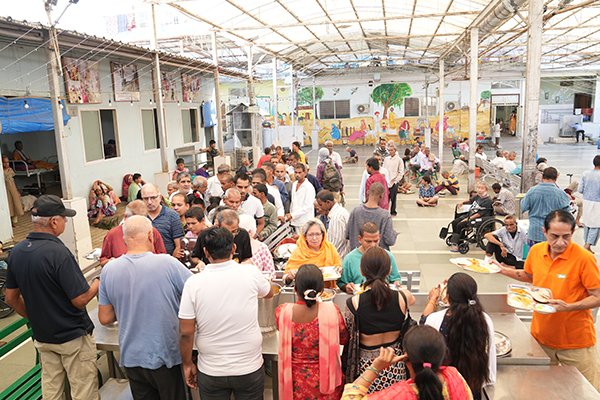
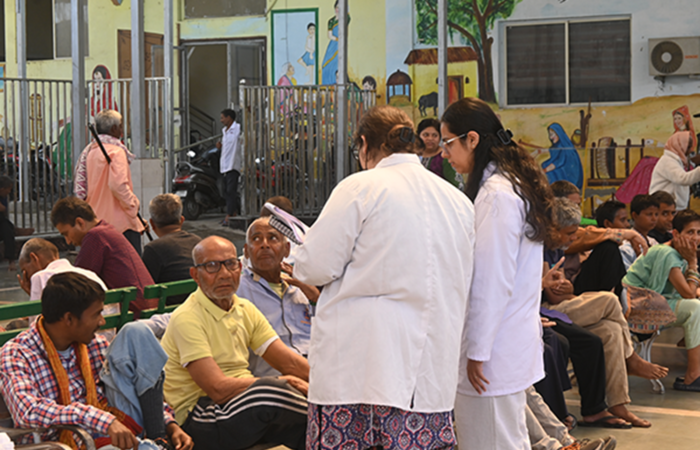
We started TESF believing we had something to give.
Seventeen years later, we are certain of something we did not expect: the people we came to serve have given us far more than we have ever given them.
This is not something NGOs say often. The narrative of humanitarian work runs in one direction – organisation gives, beneficiary receives. We understand why that story exists. It is easier to tell. It is easier to fund.
But it is not the whole truth. And we think the whole truth is worth saying out loud.
What Our People Have Quietly Taught Us
Patience has no shortcut.
In our early years, we wanted to fix things quickly. To see recovery, reunion, resolution. Our residents taught us that healing does not move on anyone’s schedule. That sometimes sitting beside someone in silence, for weeks, is the most productive thing you can do. That presence – unhurried, unconditional presence – is a form of medicine that no prescription can replace.
Gratitude does not require good circumstances.
We have watched people with nothing – no family, no history, no possessions – greet a morning with genuine thankfulness. Not performed thankfulness. Not the gratitude of someone who has been coached to seem appreciative. The real thing. The kind that comes from having lost everything and discovered that being alive, today, is still worth something.
It has made us quieter about our own complaints.
Dignity is non-negotiable – and it costs almost nothing.
The difference between a person feeling like a burden and feeling like a human being is often not resources. It is eye contact. It is being called by name. It is someone asking how you slept. Our residents taught us that dignity is not a feature of good care. It is the foundation without which nothing else works.
Every person has a story worth knowing.
India’s abandoned elderly are often treated as a category – a demographic, a statistic, a problem to be managed. Our residents dismantled that view completely. Behind every person who arrived at our gate without a name was a life – a full, complicated, sometimes extraordinary life. A retired schoolteacher. A woman who raised seven children. A man who once walked from Delhi to Haridwar on foot as a pilgrimage. When you learn to ask, and then to listen, you stop seeing a category and start seeing a person. That shift changes everything about how you do this work.
Why We Are Sharing This
We are an NGO for old age care, for the abandoned, for those with disabilities, for those with no one left. That is what we do.
But we share this because we believe the people at the margins of Indian society – the ones our cities move past without looking – are not just recipients of compassion.
They are its teachers.
And we have been fortunate enough to sit at their feet for seventeen years.