Every city in India has a population that most people walk past without seeing. They sleep on pavements, under flyovers, outside railway stations, and in the narrow gaps between buildings. They are there in the morning when office workers walk by with their phones out, and they are there at night when the city quiets down and the temperature drops. They are India’s homeless population, and their numbers are far larger than most people realise.
According to census estimates, India has over 1.7 million homeless people. Many researchers believe the actual figure is significantly higher, since homeless individuals are among the hardest populations to count accurately. In cities like Delhi, Mumbai, and across the Delhi NCR region, homelessness is visible and persistent. Yet it remains one of the most underprovided-for social issues in the country.
The Earth Saviours Foundation, known as TESF, has been working on this problem for years. Through shelter homes, feeding programmes, medical support, and rehabilitation work, TESF operates one of the most active homeless support programmes in Delhi NCR. This is a look at what that work actually involves and why it matters.
The Reality of Homelessness in Urban India
Homelessness in India is not a single story. It is many stories that arrive at the same destination through different routes.
Some people are homeless because of economic catastrophe: job loss, debt, a medical emergency that wiped out savings. Some are there because of family breakdown, domestic violence, or being abandoned by relatives who could no longer or would no longer provide support. A significant portion of India’s homeless population consists of elderly people who have outlived their social networks or been left behind as families moved away. People with disabilities and mental health conditions are disproportionately represented among the homeless, because they often fall outside every category of formal support.
What almost all homeless people in India share is the experience of being invisible to the systems that are supposed to serve them. Government shelter homes exist in many cities, but they are chronically overcrowded and often inaccessible to the most vulnerable people, particularly women, the elderly, and disabled individuals. NGO-run shelter homes in Delhi NCR fill a critical part of the gap, but demand consistently outpaces capacity.
Surviving on the streets in India involves exposure to extremes of heat and cold, lack of access to clean water and sanitation, constant risk of violence, and no reliable access to food or medical care. For elderly homeless individuals in particular, the streets are a medical emergency waiting to happen.
What a Shelter Home Actually Provides
When people think about donating to a shelter home for homeless people in India, they sometimes think of it as providing a roof. That is the beginning, but it is not the whole picture.
A well-run shelter home provides safety, which means protection from the physical dangers of sleeping rough. It provides food, typically two or three meals a day that meet basic nutritional needs. It provides sanitation, access to clean water, bathing facilities, and toilets, things so basic that their absence is hard to fully imagine unless you have experienced it. It provides medical care, both routine and emergency. And it provides something harder to quantify but equally important: the experience of being somewhere that is yours, even temporarily, where you are treated as a person.
For homeless individuals who have been living on the streets for months or years, the process of re-entering stable life does not happen overnight. A good shelter programme understands this and builds in the time and support needed for rehabilitation rather than pushing people out before they are ready.
“A shelter is not just four walls. It is the first place many of our beneficiaries have felt safe in years.”
TESF’s shelter home operations in Delhi NCR are built around this understanding. The organisation does not just offer emergency beds. It works with individuals over time, addressing the multiple interconnected needs that homelessness creates and reinforces.
TESF’s Shelter Programme: What Happens on the Ground
The Earth Saviours Foundation runs shelter and care operations across Delhi NCR, with a particular focus on elderly homeless individuals and those with disabilities, two groups that face the highest risk on the streets and receive the least support from other sources.
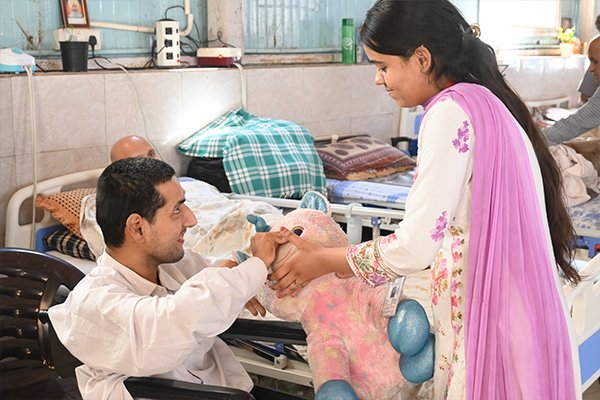
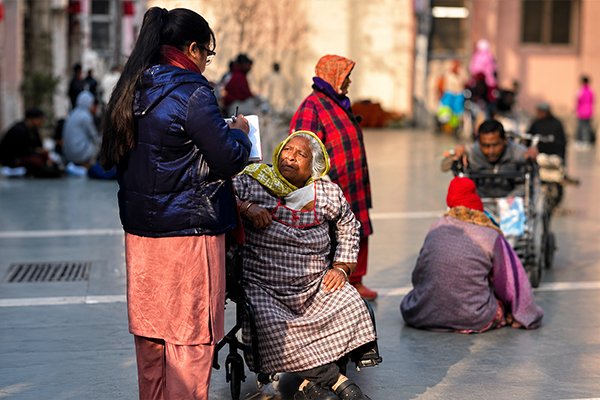
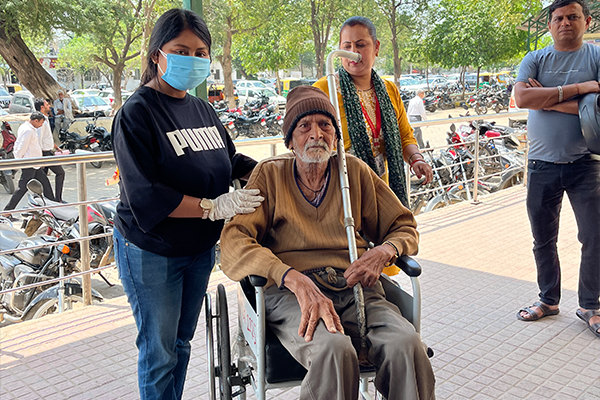
Within TESF’s shelter programme, beneficiaries receive a safe place to sleep, regular meals, basic medical attention, and access to hygiene facilities. Staff conduct regular outreach in areas where homeless individuals are known to gather, identifying people who need support and connecting them with the shelter programme.
For elderly beneficiaries specifically, TESF coordinates ongoing medical care and health monitoring. Many elderly people arriving at TESF’s shelters are malnourished, unwell, and have not received any medical attention for extended periods. The first weeks in the programme are often focused on stabilising health before anything else.
TESF also works to address the longer-term factors behind homelessness where possible. This includes helping individuals access government entitlements they may be unaware of or unable to navigate independently, reconnecting people with family members where that is safe and desired, and providing support to individuals who are able to move toward greater independence.
“Many of the people we work with have not had a single person look out for them in years. Sometimes the most important thing we do is simply show up.”
The Scale of the Need in Delhi NCR
Delhi NCR is home to one of the largest urban homeless populations in India. Winters in the region can be genuinely dangerous, with temperatures dropping low enough that sleeping rough becomes life-threatening. Every year, deaths among homeless people during the winter months are reported across the city. Summers bring a different set of dangers, including heatstroke and dehydration.
The demand for shelter homes in Delhi NCR spikes during these extreme weather periods, but the need is year-round. TESF’s operations continue through every season, maintaining shelter capacity and outreach programmes regardless of the time of year.
The numbers tell part of the story. TESF has provided shelter and care to thousands of homeless individuals across its years of operation. Tens of thousands of meals have been served through its feeding programmes. Hundreds of elderly and disabled individuals have received medical support who would otherwise have had none.
Behind each of those numbers is a person. That is the part the statistics cannot fully carry.
How Online Donations Keep This Work Going
TESF’s shelter and care programmes are funded primarily through donations from individuals, families, and corporate supporters. It continues because people choose to support it.
Online donation for homeless people in India through TESF is a direct line between someone willing to give and someone who genuinely needs it. The organisation is transparent about how donations are used, and contributions go toward specific, measurable programme costs: meals, shelter maintenance, medical supplies, and staff.
You can donate online to TESF in a few minutes. A small monthly contribution covers meals for an elderly homeless person for weeks. A larger one-time donation can fund a month of shelter for multiple individuals. Corporate donations can underwrite entire programme components.
Every rupee donated to TESF’s shelter programme reaches the ground. There is no complicated overhead structure standing between your contribution and the person who needs it.
If you have been looking for a way to support homeless people in India that is practical, accountable, and genuinely effective, TESF’s shelter home work in Delhi NCR is worth your support.
Why This Work Cannot Wait
Homelessness in India is not a problem that resolves itself. Without active intervention, homeless individuals, particularly the elderly and disabled, face deteriorating health, worsening isolation, and in too many cases, preventable death.
The Earth Saviours Foundation is one of the organisations standing in that gap, providing shelter homes in Delhi NCR and beyond, and doing the daily, unglamorous work of keeping vulnerable people safe. That work depends on continued community support.
If you can give, give today. If you cannot give right now, sharing TESF’s work with people in your network costs nothing and could bring in support that saves a life.
Homeless people in India are not invisible. They are simply people who need someone to look.
The Earth Saviours Foundation (TESF) is a registered social work NGO in India running shelter homes, elderly care programmes, and support services for disabled persons across Delhi NCR. All donations are transparent and traceable to specific programme outcomes.